"It's Just Hair."


Introduction
"It's just hair."
It's a phrase that Black women have heard multiple times throughout their lives.
Apparently, to other people it seems like Black women obsess about their hair too much. People see Black women as overly vain and pretentious. Even though we only make up about 8% of the U.S. population, Black women account for nearly 90% of consumers in the hair and beauty department. According to the National Institutes of Health, Black women purchase 9x more hair products than any other demographic. The average price of knotless braids costs between $150-$300 (sometimes more), which is one of the most common braided hairstyles for Black women. The average price of a sew-in can cost even more, and Black hair care products are often much more expensive than hair care products for other demographics. Why do we spend so much on our hair?
History

Black hair has often been a topic of controversy. As early as 3000 B.C., Africans used braids to communicate various types of information to each other without having to mutter a word. The type of hairstyles African people wore communicated which tribe they belonged to, marital status, occupation, social status, and even familial ties.

After the enslavement of Black people, many Black Americans were forced to shave their heads or remove their hairstyles. Black hair began to be stigmatized and called things such as "nappy," "hard-headed," "unkempt," and claimed to be "bad hair."
Black people rebelled against this. Enslaved Black women used their hair to map out escape routes or hide grains and seeds necessary for survival. They often used cornrows and other braids for this.

In the late 1700s, Black women began to reclaim their hair and experimented with them using braids, gems, and beads. White people hated this. They claimed that it was an act of defiance and a way to tempt men. As a result, the Tignon Laws of 1776 were enacted. These laws forced Black women to wear headscarves, covering their hair. As a way to fight back, Black women incorporated color and beads into the scarves themself.

In America, European beauty standards were at an all time high. In 1886, the hot comb was created. It was later marketed towards Black women to make their hair straighter. In 1954, Garrett A. Morgan created the first chemical relaxer, used to alter the chemistry of Black hair and make it straighter.
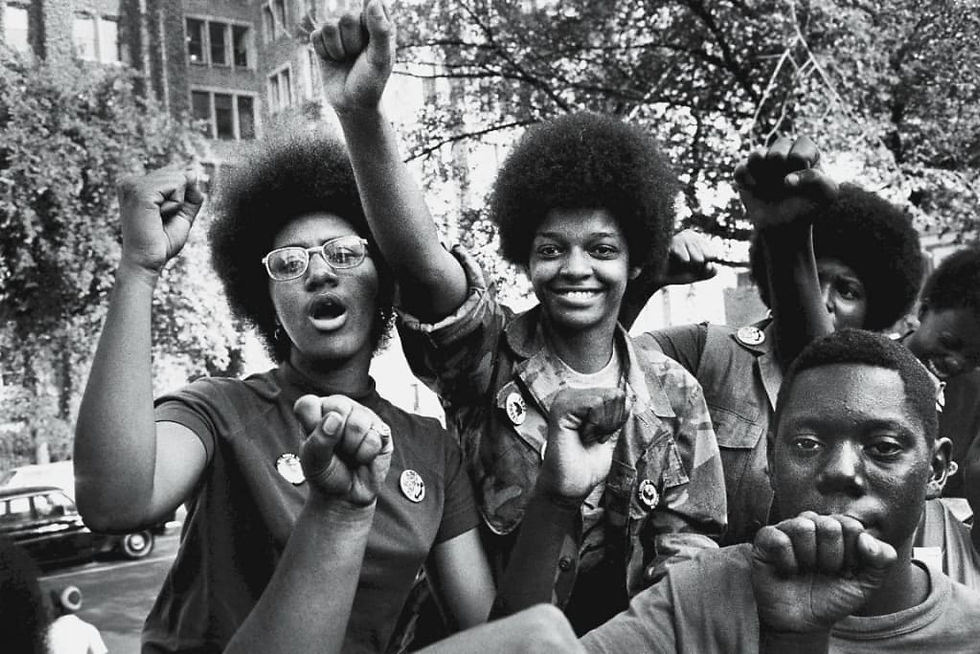
In the 1960s, the Black Power and Civil Rights movement became in full effect. This is when Black people began to reclaim their hair in its natural state. In 1962, Cicely Tyson was the first person to wear cornrows on TV and in 1999, Lauryn Hill was seen on the cover of Time magazine with her hair in locs.
Ownership

Before 1886, businesses didn't see interest in the market of Black hair care. With the invention of the hot comb, everything changed. In 1902, Annie Turnbo Malone founded the Poro College Company, which showed Black women how to care for their hair. After this, Madam C.J. Walker started selling Black hair care products of her own and became the first self-made female millionaire in the United States. Though the idea of Black hair care is amazing, industries became capitalizing on making Black women hate their hair in order to sell more products. Every ad portrayed Black hair in its natural hair as ugly and that their product could change that. Today, Korean-Americans own about 75% of the beauty supply and hair care shops in the United States despite Black consumers dominating the field. Less than 10% of the Black hair care industry is owned by Black people. Most hair care brands are owned by non-Black demographics.
Treatment

Even with these movements, today Black people still face scrutiny with their hair. Stigma increased around Black hair, and when it was straighter it was seen as better and "more professional." The very appearance of Black hair affected a person's employment rate. A study from the 2020 Duke University and 2023 CROWN Workplace Research Study showed that Black women's natural hair is 2.5 times more likely to be perceived as "unprofessional" compared to White women's hair. It also showed that Black women are 54% more likely to feel pressured into straightening their hair in order to be successful. Black women are 1.5 times more likely to be sent home from the workplace due to grooming policies. Even Black children are not safe. Darryl George, De'Andre Arnold, Andrew Johnson, and several other Black children were either suspended, denied benefits, or forced to cut off their hair as it was in violation with school policies.

Today, many Black women do not see the beauty in their own hair. Most Black women feel that their natural hair is unattractive. The industry markets natural Black hair as less feminine than straighter, longer, looser hair types. Texturism can be defined as a type of discrimination where tightly coiled or kinkier hair textures face greater social marginalization and systemic bias compared to looser curl patterns or straight hair. In simple terms, the coiler your hair is, the more ugly it is. The looser your curls are, the prettier you are because you are in greater proximity to Whiteness. 54% of Black girls at the age of 12 reported experiencing hair-related teasing or bullying from their peers. When Beyonce and Jay-Z's daughter, Blue Ivy, was just seven years old, she was bullied by journalists for her hair type. A Tiktok influencer named Lipglosssssss was bullied off the internet for wearing her natural hair. There are constant debates on Tiktok about what hair is "appropriate" for formal events. How much effort should a Black woman spare on her hair? Many Black women report being perceived by different men based on their hair styles. Black men especially will base their ratings of women based on their hair.
Personal Experience
In my personal experience, my hair affects how people see me. My non-Black peers have told me to my face that they don't like my hair in braids, and prefer straighter styles. Those whom I used to call my friends have mocked me based on my hair, and repeatedly touched my hair without permission. I've had people call my freshly washed hair "gross." I've felt like I am less pretty when my hair is in natural hairstyles. Even my Black friends have called our hair unkempt and stated that it needs to be done when it is not in $300 hairstyles. I've seen other Black women joke about how ugly their hair is when it is in its natural state. Older authority figures have criticized my appearance based on my hairstyle. I remember one of the hairstyles I was happiest in was my faux locs. It was also one of my most criticized styles. The comments I received while wearing it and when attempting to get it redone are one of the factors in why I have never worn my hair that way again.
Why It Matters

When people tell Black women that their hair is "just hair" they downplay the discrimination and backlash, the societal pressures Black women have faced for simply existing in their natural state. Black children see the way their hair is treated, and grow hate for the hair on their own heads. By criticizing Black women's hair, you criticize a part of them. You make them feel unworthy and unattractive as they are. To any Black women who are struggling to feel proud or comfortable wearing their natural hair, I have a message for you. You are beautiful inside and out. Your hair is a part of you, and you deserve to love it. You deserve to feel loved. Your hair is full of elegance and grace. No one has the right to tell you how to wear your hair, or that it is ugly. Your hair is worthy, and their is an honor in wearing it as you like and as it comes. There's nothing wrong with your glorious mane. Always stay true to the gorgeous person you are.
Movie Recommendations

P.S. The movie Nappily Ever After writen by Trisha R. Thomas, Adam Brooks, and Cee Marcellus and directed by Haifaa al-Mansour is a beautiful depiction of the struggle Black women have with their hair and how she grows to love her hair as it is.


Great article